Monday, March 16, 2020

What does the coronavirus mean for the U.S. health care system? Some simple math offers alarming answers/STAT

https://www.statnews.com/2020/03/10/simple-math-alarming-answers-covid-19/


Much of the current discourse on — and dismissal of — the Covid-19 outbreak focuses on comparisons of the total case load and total deaths with those caused by seasonal influenza. But these comparisons can be deceiving, especially in the early stages of an exponential curve as a novel virus tears through an immunologically naïve population.
Perhaps more important is the disproportionate number of severe Covid-19 cases, many requiring hospitalization or weeks-long ICU stays. What does an avalanche of uncharacteristically severe respiratory viral illness cases mean for our health care system? How much excess capacity currently exists, and how quickly could Covid-19 cases saturate and overwhelm the number of available hospital beds, face masks, and other resources?
This threat to the health care system as a whole poses the greatest challenge.As I initially described in a Twitter thread, simple mathematics can derive rough estimates for how this might play out.
This exercise can inform our level of urgency and equip us to anticipate non-obvious, second-order effects, some of which can be mitigated with proper preparation.
As of March 8, about 500 cases of Covid-19 had been diagnosed in the U.S. Given the substantial underdiagnosis at present due to limitations in testing for the coronavirus, let’s say there are 2,000 current cases, a conservative starting bet.
We can expect a doubling of cases every six days, according to several epidemiological studies. Confirmed cases may appear to rise faster (or slower) in the short term as diagnostic capabilities are ramped up (or not), but this is how fast we can expect actual new cases to rise in the absence of substantial mitigation measures.
That means we are looking at about 1 million U.S. cases by the end of April; 2 million by May 7; 4 million by May 13; and so on.
As the health care system becomes saturated with cases, it will become increasingly difficult to detect, track, and contain new transmission chains. In the absence of extreme interventions like those implemented in China, this trend likely won’t slow significantly until hitting at least 1% of the population, or about 3.3 million Americans.
What does a case load of this size mean for health care system? That’s a big question, but just two facets — hospital beds and masks — can gauge how Covid-19 will affect resources.
The U.S. has about 2.8 hospital beds per 1,000 people (South Korea and Japan, two countries that have seemingly thwarted the exponential case growth trajectory, have more than 12 hospital beds per 1,000 people; even China has 4.3 per 1,000). With a population of 330 million, this is about 1 million hospital beds. At any given time, about 68% of them are occupied. That leaves about 300,000 beds available nationwide.
The majority of people with Covid-19 can be managed at home. But among 44,000 cases in China, about 15% required hospitalization and 5% ended up in critical care. In Italy, the statistics so far are even more dismal: More than half of infected individuals require hospitalization and about 10% need treatment in the ICU.
For this exercise, I’m conservatively assuming that only 10% of cases warrant hospitalization, in part because the U.S. population is younger than Italy’s, and has lower rates of smoking — which may compromise lung health and contribute to poorer prognosis — than both Italy and China. Yet the U.S. also has high rates of chronic conditions like cardiovascular disease and diabetes, which are also associated with the severity of Covid-19.
At a 10% hospitalization rate, all hospital beds in the U.S. will be filled by about May 10. And with many patients requiring weeks of care, turnover will slow to a crawl as beds fill with Covid-19 patients.
If I’m wrong by a factor of two regarding the fraction of severe cases, that only changes the timeline of bed saturation by six days (one doubling time) in either direction. If 20% of cases require hospitalization, we run out of beds by about May 4. If only 5% of cases require it, we can make it until about May 16, and a 2.5% rate gets us to May 22.
But this presumes there is no uptick in demand for beds from non-Covid-19 causes, a dubious presumption. As the health care system becomes increasingly burdened and prescription medication shortages kick in, people with chronic conditions that are normally well-managed may find themselves slipping into states of medical distress requiring hospitalization and even intensive care. For the sake of this exercise, though, let’s assume that all other causes of hospitalization remain constant.
Let me now turn to masks. The U.S. has a national stockpile of 12 million N95 masks and 30 million surgical masks for a health care workforce of about 18 million. As Covid-19 cases saturate nearly every state and county, virtually all health care workers will be expected to wear masks. If only 6 million of them are working on any given day (certainly an underestimate) they would burn through the national N95 stockpile in two days if each worker only got one mask per day, which is neither sanitary nor pragmatic.
It’s unlikely we’d be able to ramp up domestic production or importation of new masks to keep pace with this level of demand, especially since most countries will be simultaneously experiencing the same crises and shortages.
Shortages of these two resources — beds and masks — don’t stand in isolation but compound each other’s severity. Even with full personal protective equipment, health care workers are becoming infected while treating patients with Covid-19. As masks become a scarce resource, doctors and nurses will start dropping from the workforce for weeks at a time, leading to profound staffing shortages that further compound the challenges.
The same analysis applied to thousands of medical devices, supplies, and services — from complex equipment like ventilators or extracorporeal membrane oxygenation devices to hospital staples like saline drip bags — shows how these limitations compound one another while reducing the number of options available to clinicians.
Importantly — and I cannot stress this enough — even if some of the core assumptions I’m making, like the fraction of severe cases or the number of current cases, are off even by several-fold, it changes the overall timeline only by days or weeks.
Unwarranted panic does no one any good, but neither does ill-informed complacency. It’s inappropriate to assuage the public with misleading comparisons to the seasonal flu or by assuring people that there’s “only” a 2% fatality rate. The fraction of cases that are severe really sets Covid-19 apart from more familiar respiratory illnesses, compounded by the fact that it’s whipping through a population without natural immune protection at lightning speed.
Individuals and governments seem not to be fully grasping the magnitude and near-inevitability of the national and global systemic burden we’re facing. We’re witnessing the abject refusal of many countries to adequately respond or prepare. Even if the risk of death for healthy individuals is very low, it’s insensible to mock decisions like canceling events, closing workplaces, or stocking up on prescription medications as panicked overreaction. These measures are the bare minimum we should be doing to try to shift the peak — to slow the rise in cases so health care systems are less overwhelmed.
The doubling time will naturally start to slow once a sizable fraction of the population has been infected due to the emergence of herd immunity and a dwindling susceptible population. And yes, societal measures like closing schools, implementing work-from-home policies, and canceling events may start to slow the spread before reaching infection saturation.
But considering that the scenarios described earlier — overflowing hospitals, mask shortages, infected health care workers — manifest when infections reach a mere 1% of the U.S. population, these interventions can only marginally slow the rate at which our healthcare system becomes swamped. They are unlikely to prevent overload altogether, at least in the absence of exceedingly swift and austere measures.
Each passing day is a missed opportunity to mitigate the wave of severe cases that we know is coming, and the lack of widespread surveillance testing is simply unacceptable. The best time to act is already in the past. The second-best time is right now.

Sunday, March 15, 2020

Dutch corona patients in intensive care units: 'More than half are under fifty'

https://www.ad.nl/dossier-coronavirus/40-a-50-nederlandse-coronapatienten-op-intensive-cares-meer-dan-de-helft-is-onder-de-vijftig~a058aad2/?utm_source=twitter&utm_medium=social&utm_campaign=socialsharing_web


Today there are between forty and fifty corona patients in critical condition on Dutch intensive care units. “More than half of those patients are under fifty years old. There are also young people. "" That says chairman of the Dutch Association for Intensive Care (NVIC) Diederik Gommers, in an interview with this site. 

The specialist explains that it also regularly occurs with regular flu that younger people end up in intensive care. "You can see that with the flu: those people get serious double-sided pneumonia." In addition, the elderly also choose not to be treated in intensive care. 

16 year old

A  16-year-old boy  from Breda is infected with the coronavirus and is currently in the intensive care unit of the Erasmus MC-Sophia Children's Hospital. His family calls on the whole of the Netherlands: "Wake up and take this virus seriously."
The IC specialist also says that admissions to intensive care because of the Covid-19 virus can take weeks. ,, In Erasmus there are two patients who have been on respiration for three weeks now. All other patients in the intensive care unit are shorter there. ''
Dutch doctors have also been informed about patients from Lombardy, Italy, who confirm data that young and relatively healthy people are also affected by the corona virus. ,, The youngest intubated Covid-19 patient is a girl of 16 years old. Two children with Covid-19 were admitted to the pediatric IC for observation but did not require additional therapy, '' the information circulated among Dutch physicians says. The first patient in that Italian region to receive a ventilator was ventilated for eighteen days, while he was relatively healthy. "It was a 38-year-old, otherwise very healthy man, who ran marathons for this."

Main risk factor for obesity

The average age of all covid-19 ic patients in Lombardy, Italy, was 70 years, according to which 'the main risk factor for ic uptake is obesity'. According to that information, the transmission of corona from mother to unborn children seems to 'not take place'. ,, This is based on three positively tested mothers (all incidentally complaint-free) who gave birth to a child which tested negative for covid-19. The same was observed in China, '' according to the information distributed to Dutch specialists based on the Italian region. 

Rest and control

According to Gommers, it is 'busy' in the Netherlands for the departments for the most seriously ill patients, who need continuous care and monitoring, 'but because precautions have been taken, it is still possible'. “I have had both Den Bosch and Amphia in Breda on the line today. There is peace and control . ''
According to the chairman of the IC doctors in the Netherlands, there are currently 'about forty to fifty people in intensive care units, that is the position this morning'. “In Breda, for example, the large intensive care units have between eight to ten patients. That is about 30 percent of the total capacity. It is therefore a little less busy than I initially expected, '' admits the chairman of the intensive care association, who warned that after this weekend not only  the Brabant but also the Rotterdam intensive care would fill up . 

Study highlights ease of spread of COVID-19 viruses/ CIDRAP at UMinn

http://www.cidrap.umn.edu/news-perspective/2020/03/study-highlights-ease-spread-covid-19-viruses?fbclid=IwAR1hJyLkXMqXzrRlmjgshJI0Qyc8jUjT6S7EJB2Eqk-u9BCeBkTnI5MSSOU

COVID-19 can be spread before it causes symptoms, when it produces symptoms like those of the common cold, and as many as 12 days after recovery, according to a virologic analysis of nine infected patients published today on the preprint server medRxiv.
Also, in a study published in today's Annals of Internal Medicine, researchers at Johns Hopkins found a median incubation period for COVID-19 of 5.1 days—similar to that of severe acute respiratory syndrome (SARS).

Virus concentrates quickly, sheds efficiently

Led by researchers in Germany, the virologic study, which has not yet been peer-reviewed, found that the novel coronavirus quickly begins producing high viral loads, sheds efficiently, and grows well in the upper respiratory tract (nose, mouth, nasal cavity, and throat).
"Shedding of viral RNA from sputum outlasted the end of symptoms," the authors wrote. "These findings suggest adjustments of current case definitions and re-evaluation of the prospects of outbreak containment."
The nine patients, who were admitted to the same Munich hospital, were studied because they had had close contact with an index case. Cell cultures and real-time polymerase chain reaction (RT-PCR) were done on throat swabs and samples of sputum, stool, blood, and urine. Throat swabs showed very high viral shedding during the first week of symptoms.
The findings contrasted starkly with those from the 2003 outbreak of SARS in terms of viral load. "In SARS, it took 7 to 10 days after onset until peak RNA concentrations (of up to 5x10⁵ copies per swab) were reached," the researchers wrote. "In the present study, peak concentrations were reached before day 5, and were more than 1,000 times higher."
Throat swabs were much more sensitive with COVID-19 than with the SARS virus, and the virus was easier to isolate. Seven of the nine patients had upper respiratory infection.

Social distancing to prevent infection

Michael Osterholm, PhD, MPH, director of the Center for Infectious Disease Research and Policy at the University of Minnesota, which publishes CIDRAP News, said that the results challenge the World Health Organization's assertion that COVID-19 can be contained. 
The findings confirm that COVID-19 is spread simply through breathing, even without coughing, he said. They also challenge the idea that contact with contaminated surfaces is a primary means of spread, Osterholm said.
"Don't forget about hand washing, but at the same time we've got to get people to understand that if you don't want to get infected, you can't be in crowds," he said. "Social distancing is the most effective tool we have right now."

Data generally back 2-week quarantine

The Johns Hopkins study used news reports and press releases to analyze the demographics and dates and times of possible exposure, emergence of symptoms, fever onset, and hospitalization of 181 patients with confirmed COVID-19 infection outside Hubei province, China, from Jan 4 to Feb 24.
The researchers estimated the median incubation period at 5.1 days (95% confidence interval [CI], 4.5 to 5.8 days). They found that 97.5% of patients who have symptoms do so within 11.5 days of infection (CI, 8.2 to 15.6 days).
After the recommended 14-day quarantine or active monitoring period, "it is highly unlikely that further symptomatic infections would be undetected among high-risk persons," the authors wrote. "However, substantial uncertainty remains in the classification of persons as being at 'high,' 'medium,' or 'low' risk for being symptomatic, and this method does not consider the role of asymptomatic infection."
Understanding how long active monitoring is needed to limit the risk of missing COVID-19 infections is important for health departments faced with limited resources. The results support current proposals for length of quarantine or active monitoring of people who may have been exposed to [COVID-19], "although longer monitoring periods might be justified in extreme cases," they wrote.
In a Johns Hopkins news release today, senior author Justin Lessler, PhD, an associate professor in the Bloomberg School's Department of Epidemiology, said, "The current recommendation of 14 days for active monitoring or quarantine is reasonable, although with that period some cases would be missed over the long-term."
Of the 181 patients, 69 (38%) were female, 108 were male (60%), and 4 (2%) were of unknown sex. Median age was 44.5 years. Cases were collected from 24 countries and areas outside mainland China (108 cases) and 25 provinces in mainland China (73 cases).
The researchers noted that publicly reported cases may overrepresent severe cases, which may have a different incubation period than that of mild cases.

Decontamination and protecting yourself

https://www.journalofhospitalinfection.com/article/S0195-6701(20)30046-3/pdf--a great compilation of the world literature on decontaminating coronavirus in the environment.

What has worked well to kill other coronaviruses on surfaces?

Bleach (sodium hypochlorite) 0.21% dilution on a surface for one minute.  Different bottles of bleach have different concentrations, so calculate your dilution accordingly.

Hydrogen peroxide 0.5% dilution for one minute

Alcohol 70% or more concentration, for 30 seconds.  Lower concentrations may also work but testing was limited.

Be aware that virus lives on cardboard, paper, clothing for days.  Washing clothes daily, not wearing outdoor shoes into the house, frequent showering will all reduce the amount of virus you harbor.

Let me repeat this:  this is the most infectious (easily caught) disease I have ever seen, and one of the most lethal.  You can catch it by simply breathing the same indoor air as a case.  Everything you do to be more careful will save lives.

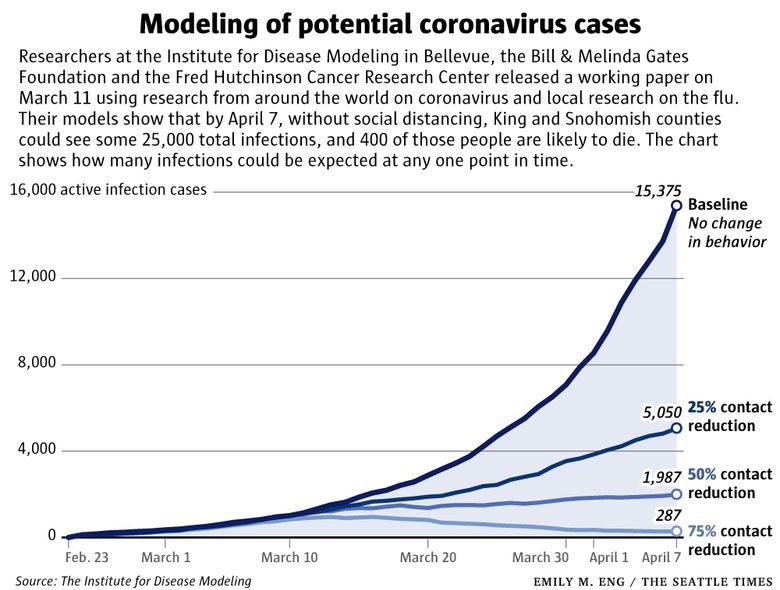
If you lock down before the horse has left the barn, you get a good outcome/Seattle Times


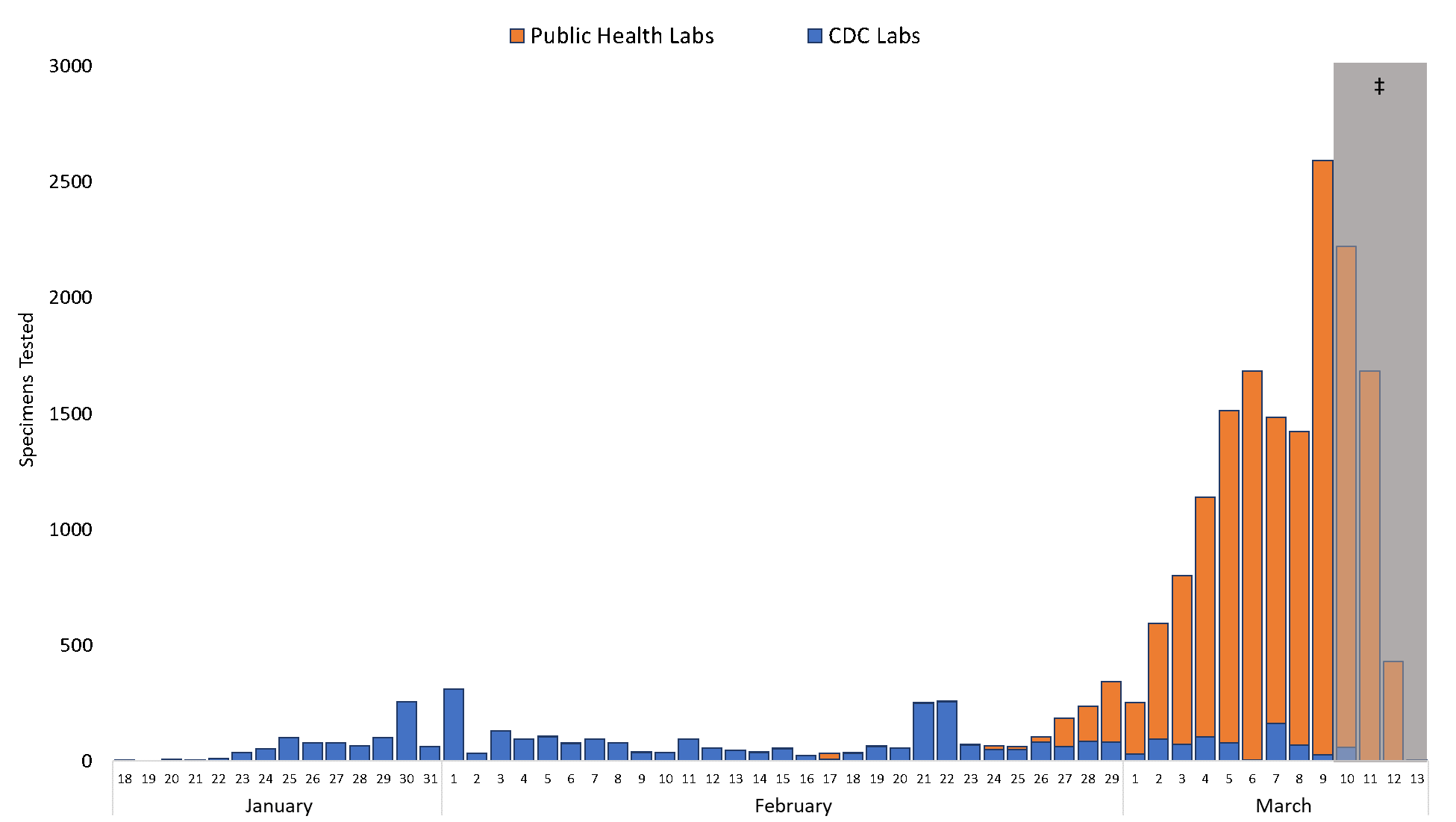
CDC's criminally inadequate testing for Covid starkly reflected in CDC graph

Number of specimens tested for SARS-CoV-2 by CDC labs (N=3,995) and U.S. public health laboratories* (N=15,749)†

Number of specimens tested for SARS CoV-2 by CDC labs (N=3698) and U.S. public health laboratories by date of specimen collection

Saturday, March 14, 2020

Inexplicable Covid-19 data, and a warning/ Nass

The scope of this epidemic does not fit all the data we have been given.

The Rzero number has to be greater than 2.2, much greater, to get so many cases so quickly in Wuhan and Lombardy, if the earliest case occurred in November-December, and the doubling time of the epidemic is 6 days.  The incubation period is said to be a median of 5 days.


And how is this for a statistic?  89 of 175 executives who attended a Biogen conference in Cambridge, MA came down with Covid-19.  That is half the people at the meeting!  I can't think of any other disease that spreads so widely.  While this reflects our lack of immunity, as a population, to the illness...well, it is still a phenomenal statistic. 

The rapid increase in cases does, however, fit existing data that showed cases had viable virus in nose or throat prior to developing symptoms, and after becoming clinically well.  In this small study, the MEDIAN period of contagiousness was 20 days.  Which is much longer than just about any other respiratory virus.  The longest period during which someone was potentially contagious was 37 days.  While patients developed antibodies (aka Seroconversion) after 6-12 days, this was not followed by a rapid decline of viral load, as expected.  Were scientists measuring the wrong antibodies, or do antibodies provide little benefit in this disease?  We should find out more about this as small experiments using convalescent serum in patients are ongoing.  


How long does the virus live on surfaces?  In indoor air?  Because the virus' viability decays in a logarithmic fashion, it is not either "viable or gone."  Instead, after a period of time (one half-life) half the virus is viable.  After another half life elapses, 1/4 of the virus is viable.  After another half life passes, 1/8 of the virus remains viable.  So there is no clear answer.  The answer depends on how many viral particles are on the surface to start with.  And it depends on how many viral particles are needed to cause an infection (which is termed the inoculum size). 


A German study of nine patients who had been in close contact to an index case, found 1,000 times as many viral particles per throat swab as SARS:  500 million (5 x 10 to the eighth power), occurring before the fifth day of illness.  Which is probably before patients realize they may actually have the Coronavirus.  It also suggests you merely need to breathe the same air as a patient to inhale enough virus to become infected.

Update 3/16/20:  WHO finally realizes the virus is airborne.

It would make sense that virus persists a long time on surfaces like glass, plexiglass and steel (days on average), and that relatively few viral particles are needed to cause infection.  And this virus can persist for hours in air (or maybe days, according to a NIOSH PP describing the the behavior of different sized particles in air. (see slide 12)


How could so many people in Lombardy become critically ill at the same time?  Two weeks ago Italy had no Covid deaths and a handful of cases.  Today Italy reports 1441 deaths, and 1518 seriously ill Covid patients.


This does not comport at all with an Rzero of 2.2, or even 10.  Some may blame the degree of spread on so-called superspreaders.  But if there are many superspreaders, then the Rzero needs to reflect them.


Something else to think about:  if both the Ohio governor and Ohio's top health official are correct and at least 1% of the population have already been infected, then we either have a less virulent mutation here in the US, or the vast majority of US cases are in the 0-14 day sweet spot of the infection, before things suddenly go south.  If my second hypothesis is correct, a disaster is looming.  I pray this infection is losing virulence as it mutates.


Lots of questions.  But one conclusion is clear:  social distancing is hugely important and should be taken very seriously by everyone.  And a lockdown, as has occurred in Italy and Spain, will only be effective if undertaken before there is widespread contagion.


While I am not generally a fan of Zeke Emanuel, this piece on Covid's spread and what is needed to slow it, is quite good.  

Coronavirus Drug Update: The Latest Info On Pharmaceutical Treatments And Vaccines/ Forbes


https://www.forbes.com/sites/alexknapp/2020/03/13/coronavirus-drug-update-the-latest-info-on-pharmaceutical-treatments-and-vaccines/#49181a7e21db

Expect to see ASO3 or related adjuvant from GSK in experimental Coronavirus vaccines:
GSK has previously developed a pandemic vaccine adjuvant platform, a system that helps to improve vaccines by strengthening the immune response in patients who receive it. In February, the company announced it was partnering with the Coalition for Epidemic Preparedness Innovations to use that platform to improve potential vaccines to the new coronavirus. As part of that collaboration, it signed an agreement with the University of Queensland, Australia, which is developing a potential vaccine.  GSK has also partnered with Chinese pharmaceutical company Clover to use its adjuvant platform with that company’s COVID-19 vaccine candidate.

Friday, March 13, 2020

Ohio health official estimates 100,000 people in state have coronavirus/ The Hill

https://thehill.com/policy/healthcare/487329-ohio-health-official-estimates-100000-people-in-state-have-coronavirus

A top health official in Ohio estimated on Thursday that more than 100,000 people in the state have coronavirus, a shockingly high number that underscores the limited testing so far.
Ohio Department of Health Director Amy Acton said at a press conference alongside Gov. Mike DeWine (R) that given that the virus is spreading in the community in Ohio, she estimates at least 1 percent of the population in the state has the virus.
"We know now, just the fact of community spread, says that at least 1 percent, at the very least, 1 percent of our population is carrying this virus in Ohio today," Acton said. "We have 11.7 million people. So the math is over 100,000. So that just gives you a sense of how this virus spreads and is spreading quickly."
She added that the slow rollout of testing means the state does not have good verified numbers to know for sure.
"Our delay in being able to test has delayed our understanding of the spread of this," Acton said. 
The Trump administration has come under intense criticism for the slow rollout of tests. Dr. Anthony Fauci, a top National Institutes of Health official, acknowledged earlier Thursday it is "a failing" that people cannot easily get tested for coronavirus in the United States.
Not everyone with the virus has symptoms, and about 80 percent of people with the virus do not end up needing hospitalization, experts say. However, the virus can be deadly especially for older people and those with underlying health conditions.
The possible numbers in Ohio are a stark illustration of how many cases could be in other states as well, but have not been revealed given the lack of widespread testing.
More than 1,300 people in the U.S. have currently tested positive for the illness, according to data from Johns Hopkins University, while about three dozen people in the country have died.
ADVERTISEMENT
Vice President Pence, who is overseeing the administration's coronavirus response, said earlier Thursday that the U.S. can expect "thousands of more cases."
Ohio officials said they are taking major actions to try to slow the spread of the virus. They are closing schools in the state for three weeks and banning large gatherings of 100 or more people. 
The state currently has just five confirmed positive cases, and 30 negative tests. Acton said Thursday that it appears that the number of cases of the virus doubles every six days.
As other experts have as well, she urged actions to slow the spread of the virus to avoid overwhelming the capacity of hospitals. Banning large gatherings and stopping school is part of that process.
"We're all sort of waking up to our new reality," she said, adding later that the state is "in a crisis situation."
Noting the concerns about hospital capacity if the number of cases spikes too quickly, Acton said "there are only so many ventilators," referring to machines that allow people to breathe when they cannot on their own.
Models indicate the number of cases could peak in late April to mid-May, she said.
If people are not seriously ill, she urged them to stay home so that only the sickest people who most need help are showing up at hospitals.
"This will be the thing this generation remembers," she added. 

Thursday, March 12, 2020

As pressure for coronavirus vaccine mounts, scientists debate risks of accelerated testing/ Reuters

https://www.reuters.com/article/us-health-coronavirus-vaccines-insight/as-pressure-for-coronavirus-vaccine-mounts-scientists-debate-risks-of-accelerated-testing-idUSKBN20Y1GZ?         
    
CHICAGO (Reuters) - Drugmakers are working as quickly as possible to develop a vaccine to combat the rapidly spreading coronavirus that has infected more than 100,000 people worldwide.  Behind the scenes, scientists and medical experts are concerned that rushing a vaccine could end up worsening the infection in some patients rather than preventing it.

Studies have suggested that coronavirus vaccines carry the risk of what is known as vaccine enhancement, where instead of protecting against infection, the vaccine can actually make the disease worse when a vaccinated person is infected with the virus. The mechanism that causes that risk is not fully understood and is one of the stumbling blocks that has prevented the successful development of a coronavirus vaccine.
Normally, researchers would take months to test for the possibility of vaccine enhancement in animals. Given the urgency to stem the spread of the new coronavirus, some drugmakers are moving straight into small-scale human tests, without waiting for the completion of such animal tests.
“I understand the importance of accelerating timelines for vaccines in general, but from everything I know, this is not the vaccine to be doing it with,” Dr Peter Hotez, dean of the National School of Tropical Medicine at Baylor College of Medicine, told Reuters.
Hotez worked on development of a vaccine for SARS (Severe Acute Respiratory Syndrome), the coronavirus behind a major 2003 outbreak, and found that some vaccinated animals developed more severe disease compared with unvaccinated animals when they were exposed to the virus.
“There is a risk of immune enhancement,” said Hotez. “The way you reduce that risk is first you show it does not occur in laboratory animals.”
Hotez testified last week before the U.S. House Committee on Science, Space and Technology about the need for sustained funding for vaccine research. There remains no vaccine for any of the new coronaviruses that have caused outbreaks in the past 20 years.
At least for now, the world’s experts have concluded that accelerated testing is a risk worth taking.
At a specially convened World Health Organization (WHO) meeting in mid-February, designed to co-ordinate a global response to the new coronavirus, scientists representing government-funded research organizations and drugmakers around the world agreed that the threat was so great that vaccine developers should move quickly into human trials, before animal testing is completed, four people who attended the meeting told Reuters.
“You want to have a vaccine as quickly as possible,” Dr Marie-Paule Kieny, former assistant director-general at the WHO, who co-chaired the meeting, told Reuters. “You have to balance this with the risk that you impose on a very small number of people, and do all you can do to mitigate this risk as much as possible.”
The conclusion of that meeting, which was not open to media, has not been officially publicized by the WHO. It does not reflect any official position adopted by the WHO, a United Nations body whose job it is to help shape global health policy.
Regulatory oversight of drugmakers and medical research is in the hands of national regulators. The most powerful of those, the U.S. Food and Drug Administration (FDA), has signaled that it is in agreement with the consensus and will not stand in the way of accelerated testing schedules.
“When responding to an urgent public health situation such as novel coronavirus, we intend to exercise regulatory flexibility and consider all data relevant to a certain vaccine platform,” FDA spokeswoman Stephanie Caccomo said in a statement. The agency had no comment specifically on animal testing for vaccine enhancement.
Coronavirus vaccine developers are still required to conduct routine animal testing to make sure the vaccine itself is not toxic and is likely to help the immune system respond to the virus.
SEATTLE RISK
Some 20 coronavirus vaccine candidates are being developed by research institutes and drugmakers including America’s Johnson & Johnson and France’s Sanofi SA. The U.S. government has earmarked more than $3 billion for coronavirus treatments and vaccines.
Biotechnology company Moderna Inc, which is working with the U.S.-funded National Institutes of Health (NIH), is the closest to human testing, announcing plans to start a trial with 45 people in Seattle this month.
Testing for the specific risk of vaccine enhancement in animals will proceed simultaneously with human trials, the NIH told Reuters, which it said should establish whether it is safe to expose larger numbers of people to the vaccine. Moderna did not respond to requests for comment.
The plan is consistent with the WHO consensus and FDA requirements, said Dr Emily Erbelding, director of the Division of Microbiology and Infectious Diseases of the National Institute of Allergy and Infectious Diseases (NIAID), part of the NIH. The trial is expected to take 14 months, a spokeswoman for the NIH said.
Dr Gregory Poland, a virologist and vaccine researcher with the Mayo Clinic in Rochester, Minnesota, expressed doubts about that approach. “This is important, but it has to be done in a way that reassures scientists and the public that these (vaccines) are not only efficacious, but safe,” he told Reuters.
Hotez said he was surprised human trials were going ahead. “If there is immune enhancement in laboratory animals vaccinated with the Moderna vaccine, that’s a showstopper,” he said.
U.S. immunotherapy company Inovio Pharmaceuticals Inc, which is developing a coronavirus vaccine in collaboration with a Chinese company, also expects to start human clinical trials in 30 U.S. volunteers in April rather than wait for animal studies on vaccine enhancement.
“The community as a whole weighed that and said we don’t want to delay the clinical process. We’ve been encouraged to go as rapidly as possible into Phase 1 studies,” Inovio Chief Executive Joseph Kim told Reuters.
The company plans to start human safety trials shortly thereafter in China and South Korea - two countries that have been hit hard by the virus. Kim said he expects to have an answer to the question of vaccine enhancement at some point this year.
The Moderna/NIH trial is enrolling patients at the Kaiser Permanente Washington Health Research Institute in Seattle. The choice of location, made several weeks ago, could prove to be problematic.
To reduce the risk to volunteers, scientists at the WHO meeting recommended that drugmakers restrict early clinical trials to small groups of healthy people and conduct them in places where the virus is not spreading, according to Kieny, who now works at French research institute Inserm. That lowers the chances that people who get the vaccine could encounter the virus and trigger a more severe reaction.
Since the location was chosen, the Seattle metro area has emerged as the epicenter of infections in the United States. Washington state has reported 162 coronavirus infections and 22 deaths, out of a total of 755 infections and 26 deaths in the country as of Tuesday, according to a tally by Johns Hopkins University.
Nevertheless, Moderna and the NIH plan to go ahead.
“We think there is no reason to have to change the site. If you change it, there might be community transmission in another site over the next couple of weeks,” Erbelding said. “Any risk of that to participants is very small. It would be manageable as the trial progresses. People are being observed very, very carefully.”
EARLY WARNING SIGNS
Tragic lessons from other vaccines and prior work on coronaviruses have raised some warning flags for developers.
The best-known example occurred in a U.S. trial in the 1960s of a vaccine created by the NIH and licensed to Pfizer Inc to fight respiratory syncytial virus (RSV), which causes pneumonia in infants. The vast majority of babies who received the vaccine developed more severe disease, and two toddlers died. A more recent example occurred in the Philippines, where some 800,000 children were vaccinated with Sanofi’s dengue vaccine, Dengvaxia. Only afterward did the company learn that it could increase the risk of more severe disease in a small percentage of individuals.
Research, including that conducted by Hotez, has shown that coronaviruses in particular have the potential to produce this kind of response. But testing for the risk of vaccine enhancement is time-consuming because it requires scientists to breed mice that are genetically altered to respond to the virus like humans. Work on these and other animal models is just getting under way in several laboratories around the world.
Moderna, Inovio and several other vaccine developers are not waiting for that process to be completed and are planning to launch human trials in record time for a virus that was only discovered in December.
Both Moderna and Inovio say their vaccines are likely to have a lower risk of vaccine enhancement because they are made using newer technology that focuses on specific genes on the outer ‘spike’ portion of the virus. Coronavirus vaccines that caused vaccine enhancement were typically made using an inactivated version of the entire virus. Neither company has produced a licensed vaccine to date.
J&J said it is developing animal models to test for vaccine enhancement and hopes to have a vaccine candidate ready for human trials in October. A Sanofi spokeswoman said the company will examine this risk before testing the vaccine in clinical trials.
“People know how traumatic the RSV experience was,” said Dr Johan Van Hoof, global head of Janssen Vaccines, J&J’s vaccine unit. “When you see signals in animals like this, we should not ignore them.”


Excellent Seattle Times poster on Covid-19 and prevention

https://assets.documentcloud.org/documents/6796908/Seattle-Times-Coronavirus-Fact-Sheet.pdf


Flattening the curve on Coronavirus/ Stat

https://www.statnews.com/2020/03/11/flattening-curve-coronavirus/

While this idea at first seems geeky or counter-intuitive, the intent is to reduce the speed of transmission so the healthcare system does not get overwhelmed, and more time is gained to develop drugs, herbs, traditional Chinese medicines, vaccines for Coronavirus.  While the epidemic will last longer if the "curve is flattened", we might avoid a rollercoaster ride in which rationing of hospital beds, ventilators, masks, doctors, etc. takes place.  If you see the term triage used, it should be understood as rationing insufficient resources.  Northern Italy and Wuhan have been there and it is not pretty.