Wednesday, January 3, 2018

Meningococcal vaccine is a scam--but you may forfeit an education if you refuse

On January 3, 2018 the Maine Legislature's joint committee on health discussed adding the Meningococcal ACWY vaccine to the list required to attend school.  France just added 8 vaccines to its required list last week.  Around the world, a push to get more and more vaccines into schoolchildren, using the threat to withhold schooling, has gained momentum.

Yet some vaccines have nothing to recommend them for schoolchildren.  Such as the  meningococcal (Menactra/Menveo) vaccines.  I summarized the facts for our legislators below.

Be mindful of the following, please, as it is never taught in health class:  meningococcal disease can be effectively treated with antibiotics, if caught early.  When a child has fever, headache, and a rash or stiff neck they should see a doctor IMMEDIATELY for treatment.


January 2, 2018


Dear Legislators:

You finally have an easy decision to make.  There is not a single good reason to add meningococcal vaccine to the schedule required for schoolchildren in Maine.

Only 3 factors need to be considered: 
  • 1.   How much benefit?
  • 2.    How much harm?
  • 3.    How much does it cost?

1.  The potential benefit eludes us. CDC says there were between zero and one cases of meningococcal meningitis in Maine last year. 


Zero to one cases.  In the entire US, only 185 people had a form of meningitis (C, W or Y) that could potentially be prevented by this vaccine last year.

You have been told that the purpose of vaccination is to protect adolescents and young adults, who are at higher risk of this disease.

Really?  CDC tells us that in children and young adults aged 11 through 23, there were only 21 cases in 2016, in the entire US, that might have been prevented by vaccination.


You may think that vaccination is needed for herd immunity.  But that isn't actually true. You may be surprised to learn that about 1/3 of people carry meningococcus in their nose at any one time, and the majority continue to carry it--even after they are vaccinated.  So, herd immunity cannot be achieved for this disease using vaccines.


2.  What are the harms?  The label says that in clinical trials, 1.0-1.3% of adults and adolescents had a serious adverse event. Regarding milder adverse events, over 25% of recipients reported headaches and fatigue. A rare but very serious side effect, Guillain-Barre syndrome, may occur.  The Menactra vaccine package insert estimates that between zero and five people, per million vaccinated, may get Guillain Barre syndrome as a result.
  

So while less than one in a million Americans will get a meningococcal C, W or Y infection in a year, an additional 0 to 5 people per million vaccinated will develop Guillain Barre syndrome (within six weeks of their vaccination).

This is a remarkable statistic.  The risk-benefit equation for this vaccine is so bad, it should never have been licensed in the first place. 

But it was.  And now you are being asked to expand its use.

3.  What is the cost?  CDC says the federal government pays $89 dollars per dose, and the private sector $113.


The cost to vaccinate 183,000 schoolchildren in Maine with 2 doses, at $100/dose, is $40 million dollars, which someone has to pay.

The vaccine proposal is an expensive boondoggle.  The only beneficiaries of this bill are the pharmaceutical industry and its handmaidens.  Please don't fall for this scam.


Meryl Nass, M.D.
MIT graduate
Currently practicing Internal Medicine in Ellsworth, Maine


Saturday, December 16, 2017

You may have heard we are seeing more early, dangerous flu this year. Not true. Look at CDC's own figures


https://www.cdc.gov/flu/weekly/

No need to run and get that flu shot, the one that is reported to be only 10% effective this year. Yes, the same flu shot that will get me 10% off my grocery bill, if I get vaccinated at the supermarket.

When you consider that a shot this year would likely make shots less effective in the next year, there is no reason at all to get it.

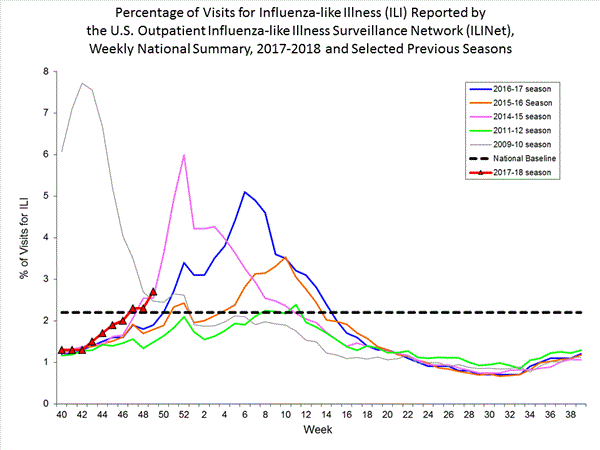
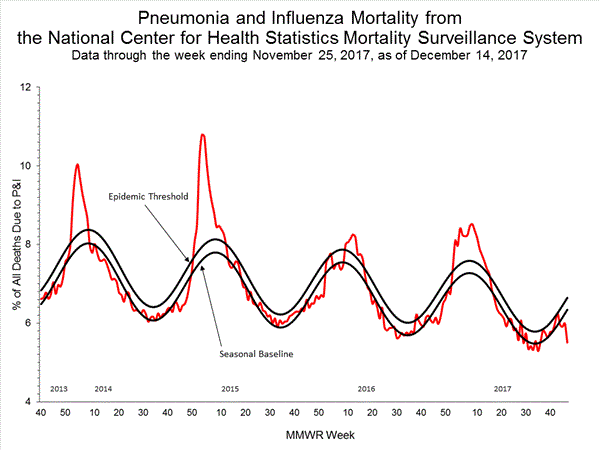
While the flu season is starting early this year, comparable to 2014 (see first CDC graph), deaths from flu and pneumonia are considerably lower than at this time of year in 2014, 2015 and 2016 (second CDC graph).  So:  is it really a bad flu season?

national levels of ILI and ARI

INFLUENZA Virus Isolated

Jordan Grumet: I Have to Admit It: I Don't Love Being a Doctor Any More

Here is a short article, by a doctor I don't know, which explains how the medical 'system', which changed during the Obama administration with a bucketload of new demands, has ruined the profession of medicine for doctors, and brought it to its knees for patients.--Meryl

I'll never leave, but the joy is gone, says Jordan Grumet, MD


  • by 
I have a breathtakingly difficult confession to make. A confession that on its face seems rather innocuous but in many ways shakes the foundations of who I always thought I was, and how I identify myself.
I no longer love being a physician.

There -- I said it. I winced even as I strung the words together to write the sentence. You see, to admit this is almost inconceivable. So much of who I was and who I have become is enmeshed in this intricate quilt of a profession. I view most every aspect of my life through this lens.
How could I not? Wanting to be a doctor is the first cognition I can recall from childhood. A childhood marked by a learning disability which brought into contention the idea of being a professional at all. A childhood in which a father's death became a precursor, a foreshadowing of who I was fated to become. I would follow in my father's footsteps. I would finish the work that was prematurely wrenched from his clutches. There was never a question whether I would succeed. The calling was too great, the pull too strong.
To deny my profession is to deny my father's legacy and to deny my own reflection.
Yet, here I stand. It didn't happen all at once. Medical school was difficult and time-consuming, but it didn't happen there. Residency was strenuous and terrifying, but it didn't happen there. My first days as an attending were grueling and sometimes awful, but also energizing.
I suppose the change happened sometime after we started using electronic medical records. It happened with meaningful use. And MACRA. And Medicare audits. And ICD-10. And face-to-face encounters. And attestations. And PQRS. And QAPI. And the ACA. 
What I do today is no longer practicing medicine. Instead it's like dancing the waltz, tango, and salsa simultaneously to a double-timed techno beat. It's sloppy, rushed, unpleasant to look at, and often leaves my partner more confused and anxious than when we started.
I have become ineffective. Not by the weight of ever-expanding medical knowledge or even the complexity of the human body. Instead, my hard drive is being spammed by thousands of outside servers.
But make no mistake, I'll never leave. My love for taking care of people is unwavering.
As for the joy and utter exhilaration of what used to be -- frankly, it's all been legislated out.
Jordan Grumet is an internal medicine physician who blogs at In My Humble Opinion. 

Tuesday, December 12, 2017

Ex-Spy Chief Admits Role In 'Deep State' Intelligence War On Trump/ Zero Hedge

Wednesday, December 6, 2017

Turning over Public Health to Industry: the UK leaps ahead/ BMJ

from today's BMJ (British Medical Journal)


Tom Jefferson: The UK turns to Witty, Vallance, and Van Tam for leadership: revolving doors?


December 6, 20173Revolving doors are used to facilitate entry or exit into a building. The trick with using these doors is always to get your timing right. Too fast or too slow and you get stuck. 
The analogy seems apposite for a brace of recent announcements of important pharmaceutical industry figures taking over parts of UK operations in key aspects of healthcare planning and delivery. 
Andrew Witty, who left the helm of GSK in April, is going to head up the UK government’s Accelerated Access Review (AAR) programme. The AAR is said to be aimed at helping NHS patients “get quicker access to innovative new diagnostic tools, treatments, and medical technologies.”Meanwhile Patrick Vallance is leaving his post of head of research and development at GSK as part of a re-shuffle by the new CEO Emma Walmsley. Vallance is taking up a senior position in the UK government, as Chief Scientific Adviser. His job will be “improving the quality and use of scientific evidence in government as head of the Government Office for Science.”Last but not least, another academic with extensive ties to industry over influenza and pandemic planning (and another ex-employee of GSK, Roche and Aventis Pasteur MSD), Jonathan Van Tam has been appointed Deputy Chief Medical Officer responsible for emergency preparedness and pandemic planning. This is a similarly senior position which holds great power and will potentially involve committing huge quantities of taxpayers’ money to projects preparing for future emergencies, which may or may not come about. It is also a very delicate role as the amount of lobbying and corporate pressure applied on governments before the 2009 influenza pandemic shows. 
What are we to make of all this?The lowering of regulatory and HTA standards is in full swing and its main driver is the pharmaceutical industry. The general rhetoric of rushing drugs and devices through to needy patients willing to accept substantial risk rests on very thin evidence of benefit and unclear public support. 
Improving the quality of evidence is desperately needed as shown by the scores of examples of clinical trials that have been abandoned or distorted that have come to light in the last decade. Pandemic planning also requires some rethinking as the millions of pounds spent on a dubious pandemic with equally dubious fixes has shown. The close space of time of these “revolving doors” makes me wonder whether the government has objectively and properly overseen the decision making which has led to such important public positions being filled by senior industry figures. Can one walk away from leading industry, or rubbing shoulders with it, and perform an important public health function with impartiality? HM Government seems to think so, but if you are unsure (as I am) you may be given pause for thought. 
A career spent working in pharma usually means a commensurate share and farewell package. We are told that Andrew Witty is also engaged in a venture capital company, so his commercial life is still very much alive. We have not been told whether they have either sold their shares, or put them in a blind trust or in general how they are to behave when advising HM government on interventions such as drugs, biologics, or diagnostics which they helped develop and market.Professor Van Tam’s track record as an ex-employee of Roche, Aventis Pasteur MSD and SmithKline Beecham (now GSK) has been excluded from the official DH press release, which is interesting, but hardly confidence-building. He frequently attends events organised by the European Scientific Working Group on Influenza (ESWI), a well know industry-funded lobbying group. His predecessor in the CMO post, John Watson, was a founding member of ESWI. Van Tam has been a consistent supporter of pharmacological measures to address influenza and as head of the Pandemic Influenza Office at the UK Health Protection Agency in 2004-2007 bears responsibility for decisions which have been heavily criticised by the Public Accounts Committee. Van Tam went to the department of health from the University of Nottingham, the Chancellor of which is none other than Witty. 
In my view it is time that the government and the public took a close look at what is going on in the upper echelons of healthcare planning and delivery in this country and considered imposing a substantial time moratorium on hiring workers with close ties to industry. Should such senior appointments not be subject to parliamentary committee scrutiny? 
It’s no consolation but, doors seem to be spinning full time in the USA too, the latest being the appointment of the former boss of Eli Lilly to head the Department of Health and Social Services. 
EMA’s imminent move to Amsterdam from London may have been a factor in the UK appointments and may generate more revolving door activity with a rush of regulators unwilling to relocate, or the Government might be trying to reassure industry that it’s still in the driving seat. Another reason for watching events closely.  With so much movement the revolving door will eventually get stuck and cease to work the way it was intended.  What the decision makers seem to have forgotten is that the success of public health depends on the public having full trust and confidence in leadership. 
Tom Jefferson, Senior Associate Tutor, University of Oxford. 

Monday, November 20, 2017

UN says Afghanistan produced 87% more opium than last year, for its biggest harvest ever. Expect a bigger supply and lower prices on the street.

In a report just issued (November 2017) by the United Nations Office on Drug Control, we learn that Afghanistan had a huge, bumper crop of opium in 2017.  Its biggest ever.  And if you read the details of the methods used to estimate the amount of opium produced, you will see that there is a large amount of guesswork, and the amount available for overseas distribution might be considerably greater than estimated.

https://www.unodc.org/documents/crop-monitoring/Afghanistan/Afghan_opium_survey_2017_cult_prod_web.pdf

Pages 7, 8

"Key Findings: 

Area under opium poppy cultivation increased by 63% since 2016, reaching a new record high... 

Opium poppy cultivation expanded to new regions and intensified where there was cultivation before…

Total eradication of opium poppy increased by 395 hectares but remained very low...

Potential opium yield and production increased in 2017 Potential opium production was estimated at 9,000 tons in 2017, an increase of 87% from its 2016 level (4,800 tons). The increase in production is mainly a result of an increase in area under opium poppy cultivation, while an increase in opium yield per hectare also contributed. In 2017, the average opium yield amounted to 27.3 kilograms per hectare, which was 15% higher than in 2016…" 

A graph of the area in hectares used to grow opium poppies in Afghanistan from 1994-present is on page 15 of the report.  As I noted previously, the two periods when there was a heavy US CIA/military presence in Afghanistan have corresponded to increased opium production.

-----------------

Today, Nov 20, it was announced at a press conference that US and Afghan military forces have launched attacks on Taliban opium factories. One might ask if this announcement is in response to the UN report.  One might also ponder the fact that opium was harvested in the spring--so the "factories" that turn opium into morphine and heroin, the ones we reported attacking-- may have been mothballed till next spring, anyway.  

"U.S. Army General John Nicholson showed videos at a press conference of targeted aerial strikes against what he described as Taliban drug factories.  “Last night we conducted strikes in northern Helmand to hit the Taliban where it hurts, in their narcotics financing,” said Nicholson, flanked by Afghan Army Lieutenant General Mohammad Sharif Yaftali…"