Wednesday, March 20, 2013

Tower of Babel as Reporters Try to Decipher Bioethics Commission Report

Reading 26 media reports describing the Presidential Commission for the Study of Bioethical Issues' report on testing anthrax vaccine and other countermeasures in children, one learns very little:
  • This was a really hard job for the Commission. 
  • They had to get it precisely right. 
  • The safety of kids is our most important priority.  
  • The tests were approved.  
  • The tests weren't approved.  
WC Fields understood this process perfectly:  "If you can't dazzle them with brilliance, baffle them with bullshit."  It isn't the media that have gone mad: instead, the text of the report the journalists are trying to understand is contradictory and confusing.

Important Point 1:  The Bioethics report confabulates regarding the degree of risk children would experience in an anthrax trial.

The NBSB (the first federal advisory committee tasked to evaluate an anthrax vaccine trial in children) report on giving children anthrax vaccine didn't waffle about the risk of the experiment.  That is why they only approved the trial with the proviso that a federal ethics panel approve it:

"Generally, the administration of experimental drugs or biological products is neither normal nor routine, and therefore not minimal risk, and thus such an intervention could not be approved by an IRB under 21 CFR 50.51."
On page 88, the Bioethics Commission Report acknowledges this critical fact:
The National Biodefense Science Board (NBSB) stated that, given the lack of data about AVA use by children, pre-event AVA research with children currently would “present more than a minor increase over minimal risk.”216 Accordingly, pre-event AVA research with children as envisioned by NBSB would not be appropriate for national-level review or approvable under section 407 because this lack of data sets the level of risk beyond the acceptable threshold of a minor increase over minimal. 
But then the report says that by using its "age de-escalation strategy" one might get around this problem and could conduct "minimal risk" research.

Anthrax vaccine is considerably more dangerous than the vaccines routinely given to children, as my last post showed.  The Bioethics Commission, however, used questionable citations selectively to claim the vaccine was perfectly safe:
"AVA safety has been evaluated in adults through both active and passive surveillance studies, and its safety is comparable to other vaccines regularly administered during routine medical appointments.129 Data in adults indicate that the mild and moderate adverse events associated with AVA are no worse than for other vaccines...130
Systemic events—such as fever, malaise, and myalgia—although associated with receipt of AVA, are much less common than injection site reactions, and are similar in both rate and type to events observed following receipt of other vaccines that are routinely administered.133 Accordingly, it might be possible to conclude that the administration of AVA in adults is minimal risk because “the probability and magnitude of harm or discomfort anticipated in the research are not greater in and of themselves than those ordinarily encountered ... during the performance of routine physical ... examinations or tests.”134
One article cited is by Sever et al, which actually showed that reports of Gulf War Syndrome-like symptoms were about 3 times more common after anthrax vaccine than expected by chance.  The article by Manette Niu had so many gross errors I told her it could be considered scientific misconduct, and she published an erratum to correct several of the errors... the Commission failed to cite the erratum.

The important anthrax vaccine safety data, such as that from the IOM, GAO and CDC trial, were ignored by the Commission, although these data carry the most weight.

Instead of discussing the vaccine label, the Commission cited the CDC Vaccine Information Statement, which is an unsigned piece of PR that diverges greatly from the carefully written vaccine label, which must be based on actual data.

Important Point 2:  The Bioethics report is completely contradictory about vaccine efficacy.  The truth is that efficacy is unknown.

First the report admits that vaccine efficacy is an issue:

the immune response it elicits is not as well characterized as its safety. While the mechanism of immunogenicity is understood and has been qualitatively observed, the quantitative relationship, or the precise level of antibody that confers protection against anthrax, is not known.135
But the report then implies the animal models (rabbits and rhesus monkeys) are reliable, when they are not.  And it wanders into the Twilight Zone with the following statement:
These studies have shown that AVA is most effective against anthrax when combined with antibiotics and given before the onset of clinical illness.
As Vera and I pointed out to the Commission, and confirmed by CDC's Advisory Committee on Immunization Practices, after the anthrax letters between 10 and 30 thousand people potentially exposed to anthrax spores took antibiotics.  Not a single one developed anthrax.  One hundred ninety-eight also took vaccine.  They failed to get anthrax.  Does vaccine improve the effect of antibiotics?  It is impossible to improve on 100% protection, though the Commission would like us to forget this  human efficacy experiment. If you give the vaccine with something that is highly (100%) protective, the vaccine will naturally appear to be "most effective" under those  circumstances.

The report's final unjustified statement on efficacy:  "Observational data in humans also provide evidence of efficacy in adults.139"  

Since the only observational studies of inhaled anthrax were of Fort Detrick workers (at least one of whom died from anthrax) and the people exposed to the anthrax letters, it is difficult to know what this could possibly refer to.  CDC researchers Marano and Lingappa said in 2001 that "medical studies to date have elicited some understanding of the anthrax vaccine, but there remain many unknowns. Among them is how many shots are really required to achieve protection against anthrax, and how long that protection lasts." That is a clear statement on the lack of efficacy data, and we are no farther along today.

Again, I must ask:  what were those Commissioners smoking?

Important Point 3:  Ignoring the NBSB conclusion on risk, the data on safety and the fact that it is unethical to perform an experiment on human subjects that can't yield the data you supposedly seek, the Commission set out to craft a "minimal risk" anthrax experiment in children.


Their implicit assumption was that the vaccine is perfectly safe in adults.  So all you have to do is show this in a small trial of 18 to 20 year olds, and if you find no major problem, start testing in younger and younger children.

Before moving from adult AVA trials to pediatric trials, data characterizing adverse reactions of AVA for persons 18 years of age are required. Researchers should begin with a thorough examination of adverse event data in the youngest adult AVA recipients before they can infer that an AVA trial with the oldest children (e.g., adolescents ages 16 and 17) poses a minimal level of risk. Additional dosing studies in the youngest group of adults must also be completed. Specifically, studies evaluating the adequacy of different dosing strategies in adults are required before pediatric studies may be conducted.142
Then the report repeats its trick of acknowledging an important truth, while confusing the meaning of the truth:
The U.S. Centers for Disease Control and Prevention (CDC) and the Institute of Medicine also have recommended additional investigation into long-term side effects, alternative dosing methods, and quantitative determination of correlates of immunity in animal models.143 
Obviously, the CDC and IOM recommended investigation of long term side effects because there were safety issues, and the safety of the vaccine has failed to be established in adults.  This should make the trial impossible to do in kids.  And the phrase about correlates of immunity acknowledges the lack of a reliable animal model, which should again prohibit such a trial in children.  But the report fails to acknowledge these crucial issues and their implications for a pediatric trial.

Important Point 4:  After saying in the early part of the report that no research involving more risk than "a minor increase over minimal risk" can be performed in children who receive no personal benefit, the Commission weasels out of this principled (and legal) stand.

The report states on page 60:  ...While the Bioethics Commission did not rule out the possibility that other sorts of extraordinary circumstances might warrant exposing children to slightly more than a minor increase over minimal risk in research from which they do not have any reasonable expecta- tions of benefit...

Important Point 5:  The Report acknowledges that countermeasures research can only be done in children if of vital importance to addressing a serious problem--but fails to acknowledge that the proposed trial will be too small for meaningful safety data to be derived, and without an animal model, the immunogenicity data cannot be used to assess efficacy or dosing.

On page 66 the report states:

In addition to being of vital importance to addressing a serious problem, the proposed MCM research must present a “reasonable opportunity” to further the understanding, prevention, or alleviation of that serious problem.154 Although various natural and manufactured threats can present a serious problem, the gravity of the problem alone is not enough to justify the research if the research itself does not present a reasonable opportunity to learn something significant to developing or deploying an MCM.
and on page 70:
Scientific validity is required for ethical human subjects research. In pediatric MCM research, each study should be well designed to answer a specific question of importance to the protection of children; studies should be adequately powered, rigorous in data collection, and feasible.161 The research plan should be peer-reviewed and approved as scientifically valid before moving forward with participant recruitment. 
The Report ignores the admission by its witness Major General John Parker, MD (retired), who said the reason for the trial was to reassure parents the vaccine had already been tested in children.  It fails to admit that the lack of an animal model precludes deriving meaningful dosing and efficacy data from a pediatric trial.

Important Point 6:  Were the contradictory and conflicting statements that pepper this report designed to allow its interpretation in a variety of ways?

Gentle readers, I know you won't be dazzled by brilliance, but be sure you are not baffled by the bullshit, couched in confusing language, to be found within this Bioethics Commission Report.

Tuesday, March 19, 2013

Schizophrenic Report on Testing Anthrax Vaccine and other Medical Countermeasures in Children is Issued: Where it is good it is very, very good, but where it is bad, it is horrid!


The Presidential Bioethics Commission Report on testing anthrax vaccine and other countermeasures on children was issued today, March 19, 2013. It was accompanied by a press release, an article in the NEJM, and a conference call with the press yesterday.  The result is many news articles, but there is confusion about what the report actually recommended.  Reporters disagreed about whether testing anthrax vaccine in children would now proceed.

The USA Today headline said, "Panel urges limited tests of anthrax vaccine in kids" and Reuters said "Test of anthrax vaccine in children gets tentative okay."  BBC agreed that the report opened the door to testing.

But the AP headline said "Panel: Thumbs down on anthrax vaccine test in kids"and the Washington Post wrote "Ethics panel sets high bar for anthrax vaccine research in children."

I suspect the confusion was deliberate.  DHHS and the Bioethics Commission appear to have wanted a few things emphasized, around which they created some buzz, and hoped the rest would be missed and forgotten.  Au contraire, let's get down in the weeds and study the report in more depth than the media mentioned above were able to do.

Here it goes:  the good, bad, and the ugly.  First, the good.


The Commission paid close attention (finally) to the existing ethical and legal standards for performing pediatric research under US law.  [Vera Sharav and I emphasized them in our Feb 18 letter to Amy Gutmann, Commission Chair.  This is, after all, the law of the land.] The Commission correctly concluded that children cannot be subjected to research that entails more than minimal risk (defined by DHHS as the level of risk experienced in everyday life) without jumping through major hoops.  

For research that is just a wee bit riskier (defined by the Commission as equal to getting a chest Xray or skin biopsy), and written in law as "a minor increase over minimal risk," the research would have to follow the requirements of 45 CFR 46.407, which includes a public review by FDA and a federal IRB, and it is tough to gain their approval for research that puts healthy, nonconsenting children at even a low risk of injury.

The Commission made explicit that research that was any riskier than this would not be permitted, period, unless a child had a preexisting medical condition to which the research was directed... and none have preexisting anthrax.  This was a very strong, clear statement about what is legally approvable pediatric research, and what is not.  But the Commission did not develop this standard:  they only noted that this is the existing legal standard, and it cannot be breached.  All good so far.

Now, the bad.  

After demonstrating a detailed understanding of the 1977 National Commission report* and the laws it generated to protect human subjects of research, the Bioethics Commission Report followed with a series of mistakes and omissions.  

For example, federal law requires that for research involving human subjects, the research must be done to obtain legitimate scientific knowledge.  Although Vera and I told the Commission this, they ignored it, saving face for DHHS, the manufacturer, the National Biodefense Science Board (NBSB), which had already approved the research, and themselves. 

Our detailed February 18, 2013 letter to the Bioethics Commission Chair pointed out that the proposed pediatric research was actually a bad joke:  it was intended for public relations purposes, not for answering scientific questions, as acknowledged during questioning by General John Parker, the chair of the National Biodefense Science Board.  That is not a legally acceptable reason to do research on people.  This alone should prohibit any anthrax research in humans (allegedly for efficacy and dosing) from taking place.  Funny, the Bioethics Commission failed to notice this red flag, though Vera and I waved it in their face.

The inconvenient truth is that there is no acceptable animal model for anthrax, which means that none of the animal experiments done to study anthrax vaccine can be scientifically extrapolated to humans.  Thus scientists still do not know how effective the anthrax vaccine is in humans (in both adults and children), nor do they know how to determine an optimal vaccine dose and schedule of inoculations.  Even the anthrax vaccine manufacturer acknowledged the need for a usable animal model, as recently as January 2013.  Without an animal model, the only way to test the vaccine's effectiveness is to vaccinate humans, then expose them to anthrax:  which thankfully has not been proposed.

When the vaccine was licensed in 1970, the Michigan Department of Public Health, which manufactured the vaccine before 1998, was asked by the federal government to provide human efficacy data for the vaccine--but they never did.  No one else has, either.  So the vaccine's effectiveness in humans has never been established for inhalation anthrax.  The human vaccine protects well in some animal species, and very poorly in others.  Its effectiveness in monkeys is not very good.  

Did you know the FDA has not approved the vaccine for post-exposure use?  It is for this very reason: there is no evidence it will work.  According to the vaccine label, "The safety and efficacy of BioThrax in a post-exposure setting have not been established. "

Despite citing some anthrax literature, the Bioethics Commission fails to acknowledge this critical fact, which I and the AHRP informed them of on 4 separate occasions, starting 13 months ago, even sending full text articles and over a dozen citations in order to make this critical problem clear to the Commission members and staff.  If you can't test effectiveness, you also can't test dosing.  So why do this trial on children, as you can't obtain the information that is said to be the reason for the trial?

This takes us from the merely bad to the ugly.  In order to give DHHS a method to test the vaccine on kids, the Commission studiously ignored all literature demonstrating that the vaccine is unsafe.  The Commission suggested instead that by testing in a small group of 18 to 20 year olds, the research can be turned into "minimal risk" research. 

How do you turn an extremely dangerous experiment into one that involves no more risk than daily life?  You cherry pick the data you cite, and you ignore obvious problems, like the fact the federal advisory committee (the NBSB) that called for your Commission to review the research was BECAUSE THEY SAID IT INVOLVED MORE THAN A MINOR INCREASE OVER MINIMAL RISK.

How do I know the vaccine is unsafe?  For starters, according to FDA it causes birth defects.  Per the label, "BioThrax can cause fetal harm when administered to a pregnant woman. If this drug is used during pregnancy, or if the patient becomes pregnant while taking this drug, the patient should be apprised of the potential hazard to a fetus."  [This implies the mother may want to consider an abortion.]

During the 2002-7 CDC trial of anthrax vaccine, there were 51 pregnancies in about 780 female subjects aged 18 to 61, even though the trial protocol warned women of the pregnancy risk and only enrolled women who promised to use birth control and not get pregnant.  Most of the safety data from this trial have never been published or released.  And the Commission never asked for the safety data, though the trial was considered the most carefully done study of anthrax vaccine ever performed. 


If you enroll teenage girls in an anthrax vaccine trial, or 18-20 year old girls, you will invariably have girls becoming pregnant and you will almost certainly see miscarriages and birth defects.  How did the Commission miss this? How did they consider this no more risky than everyday life?

Vera Sharav and I informed the Bioethics Commission about the safety issues, but our information fell on deaf ears.  I explained that the current vaccine label underestimated the number of serious adverse events in the CDC trial by a factor of ten, due to an arithmetic error.  Instead of 1.5% of subjects with serious adverse events, the true number was 12-15%. We told the Commission the GAO in 2007 said that experts from CDC and the Vaccine Healthcare Centers acknowledged that 1-2% of vaccine recipients developed illnesses that could result in permanent disability or death.  

After the anthrax attacks, CNN reported that Bill Frist, M.D., bioterrorism expert and Senate Majority Leader pointed out:
"The vaccine is a dated vaccine, it's an old vaccine. There are very real and potentially serious side effects from the vaccine and anyone who elects to receive the vaccine needs to be made aware of that. I do not recommend widespread inoculation for people with the vaccine in the Hart Building. There are too many side effects and if there is limited chance of exposure the side effects would far outweigh any potential advantage."
The Institute of Medicine in 2002 revealed that data from the military showed that rates of many illnesses increased after anthrax vaccinations.  See the five Tables from Appendix G in the IOM report, on pages 246-252. The data were generated by about 500,000 soldiers who received anthrax vaccine between 1998 and 2000.

Reviewing the IOM report data (from the military's Defense Medical Surveillance System) reveals that  after receiving anthrax vaccine, women were 5.14 times as likely to be hospitalized for carcinoma in situ of the breast and/or genitourinary system, compared to the rate before they began the vaccinations.  Soldiers were 3.46 times as likely to be hospitalized with diabetes, and about 3 times as likely to be hospitalized for thyroid cancer. Hospitalizations for psychoses were 1.5-3 times as common.  To my knowledge, these worrisome numbers have not been updated with the additional 2.5 million soldiers vaccinated since 2000, and vaccine causality has never been proven nor disproven.  Have a look at the Tables.  There are also more fractures because the vaccinations are given to soldiers on deployment, who are more prone to injury than if they remained stateside.

To recapitulate:  the Commission report properly says kids can't be subjected to research that involves more risk than a chest Xray or skin biopsy would entail.  But it would potentially be okay to test anthrax vaccine on them, which can kill or maim adults, nonetheless. What were those Commissioners smoking?

The only way the Commission could perform this sleight of hand (claiming that a very dangerous vaccine was actually a safe vaccine) was by failing to have a single anthrax vaccine expert testify before them, and by selective use of the literature. Not only did every Commission member have an MD, PhD or both (except one with an MBA), seven Commission staffers had PhDs and seven were lawyers.  I don't think we can give this highly educated Commission a pass for missing the critical safety and efficacy issues that were put right in front of their eyes.

Tomorrow, I will discuss additional problems with the Commission Report.

*  The National Commission for the Protection of Human Subjects of Biomedical and Behavioral 
Research was established in 1974 under Public Law 93-348. The Commission’s reports and 
recommendations laid the ethical and legal foundation for human subject research in the US. The
Commission’s Report and Recommendations: Research Involving Children, 35 (1977) provides the 
most authoritative ethical framework for evaluating the permissibility of research involving children.

Tuesday, March 12, 2013

Wary of Attack With Smallpox, U.S. Stockpiles a Costly Drug


The NY Times ' Donald McNeil has followed up the juicy story of how billionaire political donor Ronald Perelman got a sweetheart contract (OMG, read David Willman's story and weep, that deal was so sweet) for a high-priced smallpox drug, which isn't actually needed cause we have enough vaccine for every American, and if you are vaccinated within about 4 days after exposure to smallpox, you won't get the disease, which has a 2-3 week incubation period.

Plus, the price is way too high. The drug is cheap to produce but cost the taxpayer an arm and a leg.  Talk about golden toilet seats.

The new wild west of biodefense contracting can turn paupers into millionaiers.  More commonly, however, it turns the extremely wealthy into the wealthiest.  But you have to pay to play.

David Willman broke the story 16 months ago, and Forbes called this contract another Solyndra.  There were screams in the halls of Congress.

DHHS waited for the noise to die down, and has now finalized the contract.

By DONALD G. McNEIL Jr.
The United States government is buying enough of a new smallpox medicine to treat two million people in the event of a bioterrorism attack, and took delivery of the first shipment of it last week. But the purchase has set off a debate about the lucrative contract, with some experts saying the government is buying too much of the drug at too high a price.

A small company, Siga Technologies, developed the drug in recent years. Whether the $463 million order is a boondoggle or bargain depends on which expert is talking.

Smallpox was eradicated by 1980 and the only known remaining virus is in government laboratories in the United States and Russia. But there have long been rumors of renegade stocks that could be sprayed in airports or sports stadiums. Experts say the virus could also be re-engineered into existence in a sophisticated genetics lab.

As part of its efforts to prepare for a possible bioterrorism attack, the government is paying over $200 for each course of treatment.

Siga Technologies, which is controlled by the billionaire takeover specialist Ronald O. Perelman, will show a profit for the first time once the contract is paid for. It argues that the price is a fair return on years of investment.

And Robin Robinson, director of the Biomedical Advanced Research and Development Authority, part of the Department of Health and Human Services, the overseer of the contract for the drug, Arestvyr, defended the size of the order and the price paid. He said that

two million doses was the amount modelers predicted would be needed to contain a smallpox outbreak in a large city and that the whole country would require 12 million, along with vaccines.

The price, he said, was arrived at through federal purchasing guidelines and was “fair and reasonable” compared with the price of other commercial antiviral drugs, which he said ranged from $108 to $7,364.

But when stockpiling a smallpox drug was first proposed in 2001 after the Sept. 11 and anthrax attacks, it was expected to cost only $5 to $10 per course, said Dr. Donald A. Henderson, who led a government advisory panel on biodefense in the wake of those attacks. Dr. Henderson was a leader in the eradication of smallpox in the 1960s and is now at the Center for Biosecurity at the University of Pittsburgh Medical Center.

Dr. Richard H. Ebright, a bioweapons expert at Rutgers University, said there was little need for so much of the drug, Arestvyr, since the country has raised its stockpile of smallpox vaccine to 300 million doses now, up from only 15 million in 2001.

“Is it appropriate to stockpile it? Absolutely,” he said. “Is it appropriate to stockpile two million doses? Absolutely not. Twenty thousand seems like the right number.”

Vaccines are normally given before an infection to prevent a disease, while antivirals are given after virus infections, to treat them. Smallpox has such a long incubation period that the vaccine can prevent disease even if given as late as three days after infection. Arestvyr may also prevent infection if given early enough, but that has not been proven.

Dr. Eric A. Rose, the president of Siga and a vice president of Mr. Perelman’s holding company, MacAndrews & Forbes, acknowledged that the drug cost little to make, but said the price being charged for a patented drug was a bargain compared with AIDS antiretrovirals that cost $20,000 a year and cancer drugs that cost over $100,000 a year.

Asked about the size of the purchase, he compared it with a flu drug. “There are 80 million courses of Tamiflu in the strategic national stockpile,” he said. “Smallpox is just as contagious and has 30 times the mortality. By measures like that, I’d say 2 million is on the low end.”

He also said that Mr. Perelman had invested $80 million in the company through years of research with no sales. Without a profit potential, no company would take up smallpox, Ebola and other lethal but very rare diseases, he said.

And Dr. Isaac B. Weisfuse, who was formerly head of pandemic planning for the New York City Health Department and is now Siga’s medical policy director, said that plans calling for tens of million Americans to be vaccinated within days of a major smallpox outbreak were unrealistic and that Arestvyr could save lives.

Arestvyr — which until November was known as ST-246 or tecovirimat — prevents the virus from forming the double outer envelope that lets it break out of the first cells it infects and spread throughout the body. A 14-day course can be taken in combination with smallpox vaccine, offering double protection, which Dr. Henderson called “quite amazing.”


Arestvyr is not approved by the Food and Drug Administration except for use in emergencies.

It has never been tested on smallpox in humans because the disease was eradicated. However, it has prevented death in dozens of monkeys injected with what would normally have been lethal doses of smallpox or a related virus, monkey pox.

It also appears to have helped several humans suffering from potentially lethal reactions to smallpox vaccine, which is itself a live smallpox-related virus, but normally harmless. They included a child near death after catching his father’s vaccination virus, a soldier vaccinated just before discovering he had leukemia, and a woman whose immune system was suppressed by steroids and who was infected by touching bait meant for raccoons that contained a combined rabies/smallpox vaccine.

However, those patients were also given immune globulin, other drugs and hospital care, so it is hard to know exactly what worked.

Bioterrorism experts say the need for Arestvyr has declined since the United States increased its stockpile of smallpox vaccine, including a less potent but less risky backup vaccine for those who cannot tolerate the standard one.

The word “smallpox” still strikes fear. John Grabenstein , a retired colonel and top biodefense adviser to the Defense Department after the 2001 attacks, recalled reports of refrigerated Soviet warheads loaded with the virus that could, in theory, aerosolize it over large areas. Others have envisioned a few infected terrorists mingling in crowds.

Left untreated, smallpox kills a third of victims. But prominent experts say the danger is overblown. Because it can take up to two weeks before an infected person becomes seriously ill, and up to five more days before he begins to infect others, there is time to respond, they said.

Also, they said, by the time smallpox victims reach the infectious stage, when their pox are erupting, they are too sick to wander around. That is why outbreaks in schools or factories were nearly unheard-of

Smallpox was eradicated by “ring vaccination” — finding each case and vaccinating just the 50 to 200 people closest to it.

“If we had to, we could vaccinate the entire country in three days,” said Dr. William H. Foege, another leader of the smallpox eradication effort who now advises the Bill & Melinda Gates Foundation. This vaccine does not use a syringe, but a forked pin that Dr. Foege said he could “train anyone to use in 10 minutes.” In a true emergency, he argued, schoolteachers, police officers, firefighters and others would all be vaccinators.

Other experts think that is overoptimistic, since an attack would cause panic.

Also, Dr. Rose of Siga pointed out, there are only an estimated 700 million doses of smallpox vaccine in a world of 7 billion people, so the United States might use its vaccine and Arestvyr stockpile to help other countries. (Only the United States, Japan and Israel are believed to have enough doses for their entire populations, experts said.)

Dr. Henderson and Dr. Philip Russell, who formerly headed the Walter Reed Army Institute of Research and served on the advisory panel with him, said they expected the government to pay much less for an antiviral drug since they cost little to make and the alternative, vaccines, cost the government $3 a dose. “If they’re talking $250 a course, they’re a bunch of thieves,” Dr. Russell said.

Other experts, like Dr. Grabenstein , said that since the drugs have no other use, they are like aircraft carriers: to entice companies to make them, the government has to pay all the costs plus guarantee the producer a profit — and that it might be prudent to have extras on hand.

Mr. Perelman’s company, MacAndrews & Forbes, has spent more than $1 million lobbying each year since 2008, according to the Center for Responsive Politics, a watchdog group. A spokeswoman for the company, Christine Taylor, said it had done “absolutely no lobbying” for the Siga contract.

Whooping cough is endemic, but seems to be increasing; looking at the vaccine role

Pertussis (whooping cough) cases are occasionally vaccine-resistant.

Sometimes what looks like pertussis is a related disease, parapertussis, and the pertussis vaccine is useless at preventing this infection.  In fact, the vaccine may actually enhance nasal carriage with parapertussis strains.

Usually, vaccine-induced protection is weak and doesn't last long.

Clearly a new vaccine that is safe and much more effective is sorely needed, for both conditions perhaps, but certainly for Bordetella pertussis (the bacteria that cause whooping cough).  Instead we are likely to be told to keep getting more frequent doses of the clunker vaccine.

Wednesday, March 6, 2013

The Alliance for Human Research Protection (AHRP) Opposes Administration’s Plan to Test Anthrax Vaccine on Healthy Children

Katherine Sebelius, Secretary of the US Department of Health and Human Services (HHS), has proposed testing anthrax vaccine in children—ostensibly to protect American children in the unlikely event of an anthrax attack.[1] But no credible evidence of an impending anthrax threat has ever been cited. The only US anthrax threat, in 2001, was traced by the FBI to a US military scientist who committed suicide in 2008. 

Persons exposed to anthrax-laced letters in 2001 were treated with antibiotics, which were 100% effective at preventing disease. [2] The US government also stockpiles monoclonal antibodies and antiserum in case of an anthrax emergency.

Why then, expose children who are not at risk of anthrax to the vaccine? HHS Secretary Sebelius has invoked a simulated anthrax attack (a “war game” named Dark Zephyr) to justify injecting children with the anthrax vaccine.[1] However, decades of immunogenicity trials in adults have failed to demonstrate the vaccine’s efficacy following exposure to anthrax due to the lack of a reliable animal model, and inability to bridge animal results to humans. Indeed, the FDA-approved product label explicitly states: “The safety and efficacy of Biothrax in a post-exposure setting have not been established.”[3]

The proposed experiment and other “medical countermeasures” research in children slated to follow would put healthy children with no medical disorder at risk of serious harm, in violation of bedrock medical ethics principles. [4] Secretary Sebelius attempts to override hard-won Federal statutes enacted over the last 35 years to protect healthy children from medical experiments that put them at greater than a “minor increase over minimal risk” with no potential direct benefit unless:

“The intervention or procedure is likely to yield generalizable knowledge about the subjects’ disorder or condition which is of vital importance for the understanding or amelioration of the subjects’ disorder or condition,” and “... the research presents an opportunity to understand, prevent, or alleviate a serious problem affecting the health or welfare of children. [45 Code of Federal Regulations, Sec. 46.406, 46.407].

In 2008, CDC reported partial data from its “pivotal safety/immunogenicity trial” of Anthrax Vaccine Adsorbed (BioThrax) in the Journal of the American Medical Association. The findings of this congressionally-mandated trial reveal that 12% of participants suffered “serious adverse events” defined by US regulations as: “death, life-threatening event, initial inpatient hospitalization or prolongation of hospitalization, significant or persistent disability or incapacity, congenital anomaly...” [5] Of the 186 people who experienced 229 serious adverse events, seven died.  The nature of 213 serious adverse events has never been publicly disclosed.

Also in 2008, then-HHS Secretary Michael Leavitt tacitly acknowledged the inherent risks of the vaccine by invoking the Public Readiness and Emergency Preparedness Act (PREPA) to declare an “anthrax emergency” and grant unprecedented immunity from legal liability through 2015 to the manufacturer, Emergent BioSolutions, and everyone involved in any aspect of an anthrax vaccination program.[6]

Given available, effective remedies—i.e., antibiotics—in the unlikely event of an anthrax emergency, a pediatric trial of a vaccine of unknown efficacy will have no clinical value, much less be “of vital importance.” It is therefore ethically unjustifiable. Given the inability to bridge animal efficacy data to humans, the proposed trial will be unable to determine efficacy and dosing in children.  The limited number of children to be studied cannot provide adequate safety information, either.  Thus the proposed trial will have no scientific value, rendering it unapprovable under federal law.

Why would government officials seek to conduct an experiment on children that would violate scientific, ethical, and legal standards? Hint: follow the money.

HHS officials invoke the specter of bioterrorism, citing no evidence of a threat. In fact, the experiment's true purpose is to expand the BioThrax license to include children, and justify additional vaccine purchases for the civilian stockpile.

A 2010 report by the Center for American Progress suggests that Emergent is cashing in on billions of dollars in non-competitive government contracts:

“... the $217 million in revenue from those [2009] sales would indicate a markup in the neighborhood of 300 percent.... The fact that profit margins of the magnitude negotiated by Emergent were not only agreed to but were not a point of controversy within the agencies [HHS and DOD] that agreed to them raises broader questions about the integrity of the procurement system...” [7]

Questions requiring responses from HHS:
        
·      Will parents be informed that 12% of participants in a previous trial experienced severe adverse events, including brain damage and death?
·      Will parents be informed that the manufacturer (and everyone involved in justifying, planning, and executing the program) is shielded from all liability by the PREP Act?
·      Whose children will be sought as subjects and who will bear responsibility for a child’s injury?

Approval of this HHS-proposed experiment would be a throwback to the ignoble history of US-government sponsored medical experiments that brought shame to our nation, including the Tuskegee and Guatemala syphilis experiments, and numerous tests that exposed disadvantaged children to diseases, radiation, dangerous drugs, [8] and lead poisoning. [9] 

For the complete AHRP report on this subject, see: http://www.ahrp.org/cms/images/stories/articles/children_anthraxvaccine_moral_cliff_final_2-28.pdf


Meryl Nass, MD                                                            Vera Sharav
Board of Directors, AHRP                                            President, AHRP
mnass@roadrunner.com                                               veracare@ahrp.org

References

  1. Presidential Commission for the Study of Bioethical Issues. Welcomes Secretary Kathleen Sebelius. (2012, May 17). Available from: http://bioethics.gov/cms/pressrelease1
  2. Centers for Disease Control. (2002). Use of Anthrax Vaccine in Response to Terrorism: Supplemental Recommendations of the Advisory Committee on Immunization. Mortality and Morbidity Weekly Report, 51(45), 1024-1026. Available from: http://www.cdc.gov/mmwr/preview/mmwrhtml/mm5145a4.htm
  3. Prescribing Information. BioThrax Vaccine Adsorbed. Available from: http://www.fda.gov/downloads/BiologicsBloodVaccines/BloodBloodProducts/ApprovedProducts/LicensedProductsBLAs/UCM074923.pdf 
  4. The Nuremberg Code. Available from: http://www.ushmm.org/research/doctors/Nuremberg_Code.htm; The National Commission for the Protection of Human Subjects of Biomedical and Behavioral Research. Available from: http://videocast.nih.gov/pdf/ohrp_research_involving_children.pdf
  5. Marano, N. et al. (2008). Effects of a reduced dose schedule and intramuscular administration of Anthrax Vaccine Adsorbed on Immunogenicity and safty at 7 months. JAMA, 300(13), 1532-1543. Available from: http://jama.jamanetwork.com/article.aspx?articleid=182656
  6. Department of Health and Human Services. (2008, October 6). Declaration under the Public Readiness and Emergency Preparation Act. Federal Register, vol 73, issue 194. Available from: http://www.gpo.gov/fdsys/pkg/FR-2008-10-06/html/E8-23547.htm
  7. Lilly, S. (2010). Getting Rich on Uncle Sucker. Center for American Progress. Available from: www.americanprogress.org/issues/open-government/report/2010/10/20/8544/getting-rich-on-uncle-sucker/
  8. Grodin, M.A, & Glantz, L.H. (1994). Children As Research Subjects: Science, Ethics, and Law. NY: Oxford University Press; Sharav, V.H. Children in Clinical Research: A Conflict of Moral Values. American Journal of Bioethics, 2003: ww.ncbi.nlm.nih.gov/pubmed/14560714
  9. Higgins /Grimes v. Kennedy Krieger Institute, Court of Appeals of Maryland, 2000, 2001. Available from: http://www.courts.state.md.us/opinions/coa/2001/128a00.pdf

Disease Mongering, Conflicts of Interest, Overdiagnosis/ BMJ


I attended the Selling Sickness conference in DC 2 weeks ago and also came away impressed and morose at where my field has gone...
Elizabeth Loder: How medical journals can help stop disease mongering
6 Mar, 13 | by BMJ Group

It would be hard to collect a more fascinating bunch of topics or people in a hotel conference room. The 2013 Selling Sickness conference recently held in Washington, DC was among the most thought provoking and just plain interesting conferences I’ve been to in a long while, and I go to a lot of conferences. This third conference in a string of international conferences (Newcastle, Australia, 2006 and Amsterdam, 2010) was characterised by its organizers as part of “a global reform movement” against the “marketization of health, the corporatization of healthcare, and the hijacking of patient and consumer language to disguise market interests.” Opening speaker Shannon Brownlee identified “the different heads of the hydra” as “disease-mongering, conflict of interest, and overdiagnosis.” In her view, the challenge of this meeting was to identify these aspects of selling sickness and “weave them together in a systemic movement that promotes systemic changes.”
I participated in a roundtable discussion charged with examining the news and communication perspective on disease-mongering, and was joined on the journal side by Jocalyn Clark of PLoS Medicine. Moderator Gary Schwitzer of HealthNews Review and panelist Nancy Shute considered the problem from the vantage of medical journalists. When it came time to examine how medical journals might address their role in selling sickness and disease mongering, I suggested two possible strategies.
First, why not quarantine apparently ground breaking studies about new treatments or interventions in a special journal until the findings are replicated and long term consequences explored? Print copies of the journal would arrive in plain brown wrappers which undone would show the journal’s cover logo of a skull and crossbones. During quarantine, any news stories or summaries of research from this journal would travel with a sternly worded disclaimer, along the lines of those that accompany investment company advertisements. Something like the following would do nicely:
“Warning! Taking any action on the basis of this research could result in injury or death. The results described in this study have not been replicated and the long term effects of this treatment are unknown. Past performance is no guarantee of future results. When subjected to further investigation, most published research findings turn out to be false.”
To fill the void, medical journals deprived of these sensational research studies could instead devote themselves to the promotion and prioritization of the less glamorous medical research that really matters: replication studies, comparative effectiveness trials, and long term pharmacosurveillance and safety studies.
My second suggestion was that several parts of a typical research paper are too important to be written by the researchers or anyone else with a vested interest in the outcome of the research. These include the portions where “spin” is mostly likely to enter into the paper, namely the title, abstract, results, and conclusion sections, and any summary or “what this study adds” statements that authors are now sometimes asked to supply. These portions of research papers should instead be written by disinterested parties with subject matter expertise.
I have no illusion that these things will come to pass but I can dream, can’t I? During the question and answer session fellow panelist Nancy Shute turned to me and said “I’m impressed by your radicalism.” I’ll take that as a compliment!
Elizabeth Loder is US research editor, BMJ

Friday, March 1, 2013

Yet another report of a 13x greater incidence of narcolepsy after Pandemrix vaccine/ BMJ

The full article in the BMJ is here.  It simply confirms the same increased incidence in the UK as has been found elsewhere in countries that used Pandemrix, although initially it was said Scandinavians had very high rates of autoimmune disorders and were at higher risk than others.

Given the up to 10 year interval between disease onset and diagnosis, we won't know for awhile how wide the age spread is that was affected (it might have affected all ages).

The take home message, which I have recited many times before, is that you will not know until long after a massive vaccine campaign has been completed whether there are horrific side effects.  You won't know unless you improve surveillance, reporting, and make rapid case ascertainment your priority.

You also are unlikely to know about side effects unless they are really severe (as this one is) and if they occur at many times the expected rate (narcolepsy occurring in teens 13 times more than expected).  To me, that is absolutely not acceptable.

Flu Shots: The more you get, the worse they work?/ CIDRAP

Study:  Getting flu shots 2 years in a row may lower protection
a
Mar 1, 2013 (CIDRAP News) – Experts are puzzled by a new study in which influenza vaccination seemed to provide little or no protection against flu in the 2010-11 season—and in which the only participants who seemed to benefit from the vaccine were those who hadn't been vaccinated the season before.
The investigators recruited 328 households in Michigan before the flu season started and followed them through the season. Overall, they found that the infection risk was nearly the same in vaccinated and unvaccinated participants, indicating no significant vaccine-induced protection, according to their report in Clinical Infectious Diseases. That contrasted sharply with several other observational studies that found the vaccine to yield about 60% protection during the same season.
In trying to figure out why the effectiveness was so low, the researchers sifted their data in different ways, said Arnold S. Monto, MD, of the University of Michigan, senior author of the study. "We discovered that if you separated out those that had not been vaccinated the previous year, you got percentages close to what were seen in the major vaccine effectiveness studies," he told CIDRAP News.
"We were playing with this for a long time, and there was clear interaction of sequential vaccination and vaccine effectiveness, looking at it in a strictly statistical way," he added. "We felt it had to be separated out."
The vaccine was found to be 62% effective in those who hadn't been vaccinated the previous year. That was similar to findings in the other observational studies and also to the results of a recent, rigorous meta-analysis of randomized controlled trials. In contrast, those who had been vaccinated 2 years in a row (before both the 2009-10 and 2010-11 seasons) got no significant protection.
An additional finding was that the vaccine did not seem to protect participants who were exposed to flu in their own household, though the numbers in that arm of the study were small.
Researchers from the US Centers for Disease Control and Prevention and the University of Hong Kong collaborated with University of Michigan researchers on the study, with Suzanne E. Ohmit, DrPH, of Michigan as the lead author.
The findings come amid a growing number of studies that raise questions about flu vaccine effectiveness (VE). They include, among others, last week's CDC report that this year's vaccine has worked poorly in elderly people and three recent European studies showing that vaccine-induced immunity in the 2011-12 season waned after 3 to 4 months. Other studies have cast doubt on the long-standing belief that a close match between the vaccine virus strains and circulating strains improves VE.
In an editorial commentary accompanying the Michigan study, John Treanor, MD, and Peter Szilagyi, MD, both of the University of Rochester Medical Center, wrote, "As we are currently struggling through one of the most vigorous influenza seasons in recent memory, the apparent failure of influenza vaccine under optimal conditions seen in this study is indeed troubling."
And Edward Belongia, MD, a Wisconsin clinician-researcher and member of the CDC's Influenza Vaccine Effectiveness Network, said he was perplexed by the low overall VE in the study, given the approximate 60% protection levels found in studies by the network the same season. "I don't know what to make of it," he told CIDRAP News.
Other researchers have said that additional studies suggesting a negative effect of prior-year vaccination on flu VE will be emerging in coming months, but they declined to give any details...

Another flu expert, Michael T. Osteholm, PhD, MPH, said the findings further complicate the already difficult challenge of framing flu vaccination recommendations. Osterholm, director of the University of Minnesota's Center for Infectious Disease Research and Policy, which publishes CIDRAP News, was the lead author of a lengthy 2012 report on the flu vaccine landscape and the need for better vaccines."We're at a major crossroads in integrating our current influenza vaccine science with our current flu vaccine recommendations," he said. "The issues of vaccine efficacy by age and by vaccine [formulation] as well as the concept of waning immunity in a given season, the lack of correlation between vaccine virus match with circulating viruses and protection, and the potential for repeated annual vaccination to lower one's protection, versus not being repeatedly vaccinated, are all immense challenges for us today."If we don't go back and revisit our current vaccine recommendations, I think we stand to lose a great deal of credibility with both the medical community and even the general public as to the trustworthiness of what public health concludes and promotes," he said. "This is exactly why we need game-changing influenza vaccines."


Want to keep your newly transplanted heart? Avoid adjuvanted swine flu vaccines!

Do vaccines ramp up the immune system, sometimes to the significant detriment of patients?  Yes.

Why then are they pushed so hard in patients who are especially vulnerable?  The answer relates more to the religion than to the science of vaccines.

You have just had a heart transplant.  You do not want to reject your new heart.  Why, then, get a flu vaccine?  Why get a swine flu vaccine with ASO3 adjuvant?  Because your ignorant doctor advised you strongly to do so, after all the hype.

And what happened?  You were 26 times more likely to have a severe, acute cellular rejection episode.
Impact of adjuvanted H1N1 vaccine on cell-mediated rejection in heart transplant recipients.
Schaffer SA, Husain S, Delgado DH, Kavanaugh L, Ross HJ.  2011 Dec;11(12):2751-4.
Department of Medicine, University Health Network, University of Toronto, Toronto, ON, Canada. allan.schaffer@utoronto.ca
Abstract
During the H1N1 influenza virus pandemic, vaccination of high risk groups including solid-organ transplant recipients was advised. A retrospective case control study of 60 heart transplant patients, 15 having received the H1N1 virus antigen and ASO3 adjuvant vaccine (GlaxoSmithKline, Mississauga, ON, Canada) within 21 days and 45 having not been vaccinated, all undergoing routine surveillance endmyocardial biopsies, was performed. The overall rate of cellular rejection (all grades) was not statistically different between groups; however, acute cellular rejection, ≥grade 2 (1990 ISHLT criteria), was more frequent among those having recently vaccinated (control: 1/45 vs. 6/15, p = 0.001). On multivariate analysis, the only risk factor found to be associated with acute cellular rejection was recent H1N1 viral antigen and adjuvant vaccination (OR 26.5: 95% CI 02.59-270.5). Vaccine adjuvants increase host response to vaccine antigens by immune upregulation potentially increasing risk of rejection in solid-organ transplant recipients. The potential hazard of vaccination this study raises must be weighed with the clear benefit vaccination has proven to be.

Would you give anthrax vaccine to a child? DHHS Secretary Sebelius would


I am honored to be on the board of the Alliance for Human Research Protection and to be working with its dynamic President, Vera Sharav, on stopping a dangerous trial of anthrax vaccine in healthy children.   

Why sacrifice healthy children for this purpose, when the vaccine does not even have a useful role in post-exposure prophylaxis of anthrax?  Even FDA agrees:  it has failed to license the vaccine for this use.  As the label notes:
“The safety and efficacy of Biothrax in a post-exposure setting have not been established.”  http://www.biothrax.com/prescribinginformation_biothrax_us.pdf
Vera and I have written a stunning report on the hyped threat, pseudoscience, and careful attention to the avoidance of facts--all necessary in order to support a trial whose only possible raison d'etre is to shovel yet more public funds into the coffers of the anthrax vaccine manufacturer, Emergent Biosolutions, and its CEO (Fuad El-Hibri)'s pockets.

Our long report is written in the form of a letter to the Chair of the federal advisory committee making recommendations for the pediatric trial.  

A brief discussion of this matter can be found here.

There will be further posts over the next few weeks on this matter.

Sunday, February 17, 2013

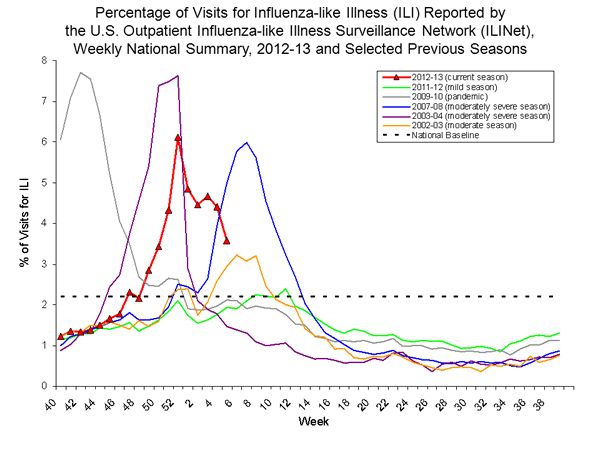
Flu Season Nearly Done/ CDC

national levels of ILI and ARI

Sunday, February 10, 2013

Friday, February 8, 2013

ASO3 for the US avian flu stockpile / CIDRAP


I'm 3 months late on this.  Since this article came out, it became clearer that ASO3 caused narcolepsy in more countries than just Scandinavia and Ireland, and that adults were also at risk of developing narcolepsy after the vaccine.  And these are BAD cases of narcolepsy, not the minor cases I have seen in clinical practice.  There is also more Guillain-Barre with this vaccine.

But FDA asked the panel to comment on immunogenicity.  Sure enough, the vaccine does induce antibodies.  But we don't know if they work.  Not to worry.  After licensure, GSK can freely change the antigen.

FDA panel endorses H5N1 vaccine with adjuvant
Robert Roos * News Editor
Nov 15, 2012 (CIDRAP News) – A government advisory committee yesterday endorsed the safety and immunogenicity of an adjuvant-containing H5N1 influenza vaccine proposed for inclusion in the US pandemic emergency stockpile, signaling that it could become the first adjuvanted flu vaccine to win approval in the United States. 
On two unanimous votes, the Food and Drug Administration's (FDA's) Vaccines and Related Biological Products Advisory Committee (VRBPAC) said the immunogenicity and safety data on GlaxoSmithKline's (GSK's) H5N1 vaccine are adequate to support its licensure for use in adults. The aim is to strengthen the US stockpile for the threat of an H5N1 pandemic. 
The vaccine contains GSK's proprietary adjuvant AS03, which is used in several other GSK vaccines licensed in other countries. One of these, Pandemrix, used in Europe during the 2009 H1N1 flu pandemic, was linked with an increased risk of narcolepsy in children in Finland, Sweden, and Ireland. 
The purpose of the adjuvant is to induce a stronger immune response with less antigen or active ingredient, which AS03 achieves, according to GSK. The vaccine contains 3.75 micrograms (mcg) of antigen, compared with 15 mcg in standard flu vaccines without adjuvants. 
No seasonal flu vaccines used in the United States contain adjuvants, nor does the existing H5N1 vaccine in the US emergency stockpile. The government has acquired a supply of adjuvants for possible emergency use, but they are not part of a specific vaccine. 
The US Department of Health and Human Services (HHS) contracted with GSK to develop an H5N1 vaccine with antigen-sparing potential for use in the US Strategic National Stockpile, according to an FDA briefing document...
Another member, Gillian Air, PhD, said, "We don't know what these HI titers mean in terms of protection, but they've demonstrated this is immunogenic."

Elderly Vaccinated Danes more likely to get Flu A /H3N2 than the unvaccinated/ Eurosurveillance

Of 364 older Danes who were seropositive for H3N2 infection and about 1000 who were negative, it turned out those who were positive were a bit more likely to have been vaccinated this season for flu.

This may mean the vaccine was of no use due to high rates of mutation.  Or it could mean the vaccine-induced antibodies made you more likely to get sick.  (I have previously talked about the concept of blocking antibodies, which have occasionally been seen after introduction of a new vaccine, increasing the propensity to get the disease you are ostensibly being protected from. The new vaccine is soon taken off the market.)

Thursday, February 7, 2013

The Flu Vaccine is a Paper Tiger, but the Nurse must wear a Paper Mask

"If you aren't vaccinated, you must wear a mask throughout flu season, or be fired!"

But what if you are in the 45-55% of healthcare workers who got vaccinated but lack immunity to circulating flu strains?  Shouldn't you be wearing a mask too?

What if you are in the 75-100% of vaccinated workers who get no protection some years (like last year)  because the vaccine was a poor match to the strains that actually circulated?  Shouldn't you be wearing masks, if the idea for the masks is to protect patients?

Not that there are any data suggesting a mask helps prevent the spread of flu when the wearer is not actively coughing or sneezing.

The European Center for Disease Prevention and Control, which may be more forthcoming about flu than CDC, points out flu vaccine effectiveness is thought to be in the 50% range this year, better than last year:
The vaccine effectiveness of the 2012/13 influenza vaccine is expected to be higher against influenza A(H3) infection than the especially low levels observed in Europe for the 2011/12 season. First indications from the UK confirm this although the estimates are still only in the range of 45% to 55%.
Also from the European Center, it appears the Europeans are so unconcerned about the need for HCW vaccinations they fail to even track them!  They don't trust the US/ CDC figures for vaccine effectiveness, either. 
Influenza Vaccine Coverage 
Seasonal vaccine coverage data are not yet available from the VENICE project* for the 2012/13 season. From the questionnaire, Latvia reported a lower proportion of people vaccinated while the UK (England) reported vaccination coverage comparable to 2011/12. Preliminary results from England estimate an uptake of >70% among those aged ≥65 years and around 50% in those under 65 years old in a clinical risk group, with a much higher uptake among pregnant women than during the previous season. Among the nursing homes affected by ARI outbreaks in France, the vaccine coverage (81%) was the lowest observed since 2003/04. This proportion is still to be confirmed, but it could reflect a lower national vaccine coverage among older people this season. The UK (Scotland) reported an increased uptake by pregnant women; 48.3% in those without risk factors and 64.6% in those with risk factors. Norway mentioned low vaccination coverage in risk groups. There is no information on immunisation of healthcare workers. Overall, it should be noted that there have been small declines in vaccine coverage in older age groups (the only risk group with consistent data) in a number of EU countries since the 2007/08 season [7]...
Vaccine effectivenessA recent American study [9] published an early estimate of influenza vaccine effectiveness non-adjusted for age of 62% (95% CI: 51%–71%) for 2012/13 which is better than for the previous season in the United States. A study from Canada showed somewhat lower levels [12]. However, it is essential to note that the US estimates were not adjusted for age, risk groups and other confounders and the proportions of circulating viruses in the USA and the EU are quite different this season: there are few A(H1N1) viruses circulating in the USA. Also, the analytic approach is different; in Europe the focus is more on effectiveness in the high risk groups. Hence, the US percentage should be interpreted with caution and may not reflect the vaccine effectiveness in Europe or for high risk groups. Early estimates of vaccine effectiveness in the UK have shown an overall adjusted vaccine effectiveness of 51% (CI: 27%–68%) with 49% against influenza A alone and 52% against influenza B.